How to Calculate CFM for a Room
What Is CFM?
CFM stands for Cubic Feet per Minute — it measures how many cubic feet of air pass through a point in one minute. CFM is the universal measurement for airflow in HVAC (Heating, Ventilation, and Air Conditioning) systems. Whether you are sizing a bathroom exhaust fan, choosing a range hood, or designing a whole-house ventilation system, you need to know the required CFM.
Getting the CFM right is essential. Too little airflow means poor indoor air quality, excess humidity, and uncomfortable temperatures. Too much airflow wastes energy, creates drafts, and increases noise. This guide shows you exactly how to calculate the correct CFM for any room.
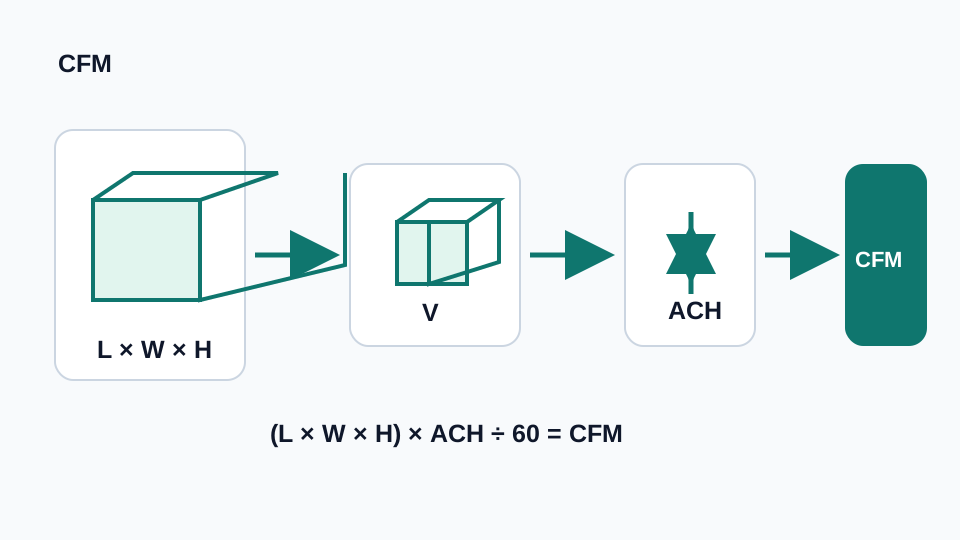
The CFM Formula
The standard formula for calculating required airflow is:
Where:
- Room Volume = Length × Width × Height (in cubic feet)
- ACH = Air Changes per Hour (how many times per hour the room's air should be fully replaced)
- 60 = Minutes per hour (converts hourly volume to per-minute flow)
Step-by-Step: How to Calculate CFM
Step 1: Measure the Room
Measure the room's length, width, and ceiling height in feet. If your measurements are in meters, multiply by 3.281 to convert to feet.
| Measurement | Example |
|---|---|
| Length | 15 ft |
| Width | 12 ft |
| Ceiling Height | 8 ft |
Step 2: Calculate Room Volume
Multiply all three dimensions:
Volume = 15 × 12 × 8 = 1,440 cubic feet
Step 3: Determine ACH (Air Changes per Hour)
ACH depends on the room type and its use. Higher occupancy or moisture-producing activities require more air changes:
| Room Type | Recommended ACH |
|---|---|
| Living Room / Bedroom | 4–6 |
| Kitchen | 7–15 |
| Bathroom | 6–10 |
| Office / Conference Room | 4–8 |
| Workshop / Garage | 6–10 |
| Basement | 3–6 |
| Attic | 10–15 |
Step 4: Apply the Formula
For our example living room (1,440 cu ft) with 6 ACH:
CFM = (1,440 × 6) / 60 = 8,640 / 60 = 144 CFM
This means your HVAC system or ventilation fan should deliver 144 cubic feet of fresh air per minute to properly ventilate this room.
Worked Examples
Example 1: Bathroom Exhaust Fan
| Parameter | Value |
|---|---|
| Dimensions | 8 ft × 6 ft × 8 ft |
| Volume | 384 cu ft |
| ACH (bathroom) | 8 |
| CFM Required | (384 × 8) / 60 = 51.2 → 60 CFM (round up) |
Always round up to the nearest available fan size. For this bathroom, a 60 CFM fan is appropriate.
Example 2: Workshop / Garage
| Parameter | Value |
|---|---|
| Dimensions | 20 ft × 20 ft × 10 ft |
| Volume | 4,000 cu ft |
| ACH (workshop) | 8 |
| CFM Required | (4,000 × 8) / 60 = 533 CFM |
Example 3: Open-Plan Kitchen and Dining
| Parameter | Value |
|---|---|
| Dimensions | 25 ft × 15 ft × 9 ft |
| Volume | 3,375 cu ft |
| ACH (kitchen) | 10 |
| CFM Required | (3,375 × 10) / 60 = 563 CFM |
Quick Rule of Thumb: 1 CFM per Square Foot
If you do not want to calculate room volume and ACH, a common shortcut is 1 CFM per square foot of floor area for general-purpose rooms with standard 8-foot ceilings. For a 150 sq ft bedroom, this gives approximately 150 CFM. However, this rule is less accurate for rooms with high ceilings, heavy moisture, or unusual occupancy.
For a more detailed breakdown by room type, see our CFM Per Square Foot Guide.
Factors That Increase Required CFM
- High ceilings: Rooms with 10 ft+ ceilings have more volume and need proportionally more CFM.
- High occupancy: Each person generates heat and CO₂. Add 7.5 CFM per additional person beyond standard occupancy (per ASHRAE 62.1).
- Cooking or moisture: Kitchens and bathrooms need higher ACH to remove moisture and odors.
- Heat-generating equipment: Workshops with power tools, server rooms, or commercial kitchens may need 15+ ACH.
- Poor insulation: Older buildings with air leaks may require additional airflow to maintain comfort.
CFM vs. ACH: What's the Difference?
CFM measures the rate of airflow (volume per minute). ACH measures how completely the air in a room is replaced per hour. They are directly related: for a given room volume, a higher ACH means a higher CFM is required. Building codes and standards like ASHRAE 62.1 specify minimum ventilation rates in both CFM per person and ACH per room type.
Standards and References
- ASHRAE 62.1 — Ventilation for Acceptable Indoor Air Quality (commercial buildings)
- ASHRAE 62.2 — Ventilation and Acceptable Indoor Air Quality in Residential Buildings
- IRC Section M1507 — Residential mechanical ventilation requirements
- IMC Section 403 — International Mechanical Code ventilation rates
Frequently Asked Questions
What is CFM in HVAC?
CFM stands for Cubic Feet per Minute. It measures the volume of air moved in one minute and is the standard unit for specifying airflow in HVAC systems, exhaust fans, and ventilation equipment.
What is the formula to calculate CFM?
The formula is CFM = (Room Volume × ACH) / 60, where Room Volume is length × width × height in cubic feet, ACH is air changes per hour, and 60 converts hours to minutes.
How many CFM do I need for my room?
It depends on the room size and use. For general living spaces, use 1 CFM per square foot as a quick estimate. For kitchens, bathrooms, and workshops, you need higher air changes per hour (6–15 ACH). Use our free CFM calculator for exact results.
What is a typical ACH value for homes?
Living rooms and bedrooms typically require 4–6 ACH. Bathrooms need 6–10 ACH. Kitchens require 7–15 ACH. Conference rooms and offices need 4–8 ACH. These values come from ASHRAE 62.1 and local building codes.
Is higher CFM always better?
No. Too much CFM can cause drafts, noise, and energy waste. Too little CFM leads to poor air quality and temperature imbalances. The goal is to match CFM to the room's requirements based on volume and intended air changes per hour.